Degus require a large cage/enclosure and many marketed as suitable simply are not big enough. Ideally, we would like to see degus housed in large DIY enclosures with at least 1mx1mx1.5m space. German rodent care is miles ahead of us and many German sites have great info on building a suitable set-up – here are some useful sites:
http://www.diebrain.de/ch-gehege.html
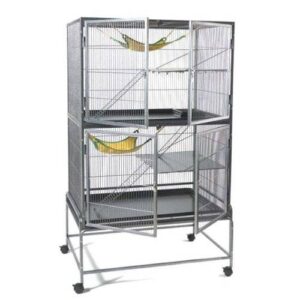
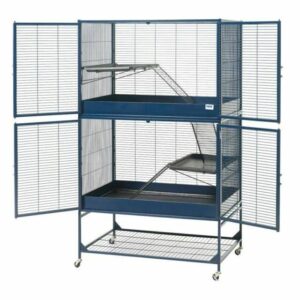
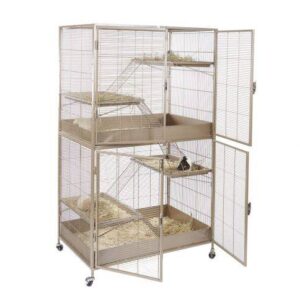
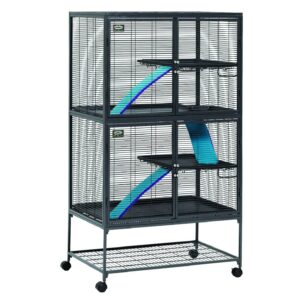
The absolute minimum cage size we will accept is the Liberta Explorer (or cages of the same size). The Savic Royal Suite 95 and Critter Nation Double are also acceptable for degus, but the plastic shelves will need to be covered with fleece (or replaced with metal/wooden shelves) and regularly checked for any signs of chewing.
Hay
Hay should make up the majority of degus’ diets and must always be available. We feed a mixture of meadow hay and timothy hay, with the occasional addition of oat grass hay and readigrass or graze-on (dried grass). If your degu doesn’t eat much hay, try different types, and mix in some forage or pellets to entice them.
Forage
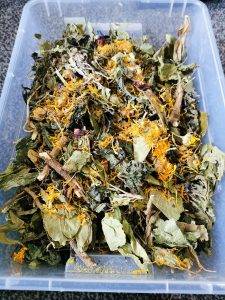
Alongside hay, we feed a daily handful of dried or fresh forage (leaves, herbs, flowers, roots, bark, branches).
Our dried forage mix typically consists of:
Leaves – Plantain, Apple, Echinacea, Raspberry, Nettle, Dandelion, Hazelnut
Roots – Chicory or Dandelion
Bark – Willow or Birch
Flowers – Marigold, Rose, Cornflower, Chamomile, Mallow
In the spring & summer months, we collect fresh leaves and branches such as plantain, dandelion, yarrow, clover, willow, hazel, hawthorn and birch for the degus to enjoy.
Pellets
Pellets should only form a small part of the diet and should be viewed as a supplement, rather than a main food. Too many pellets can lead to obesity and serious dental issues as the degu fills up on these, neglecting the all-important hay. We feed only around 1 tablespoon of pellets per day, alongside a mixture of forage (with hay available 24/7). Pellets containing grains and cereals should be avoided – grass/hay based pellets are best (not alfalfa!)
Recommended Sites for Degu Food
The Hay Shed – hay & forage
Nature’s Own Pets – hay & forage
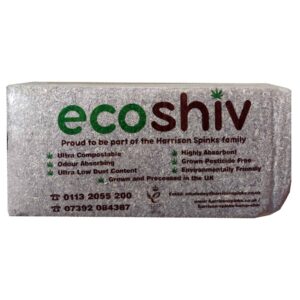
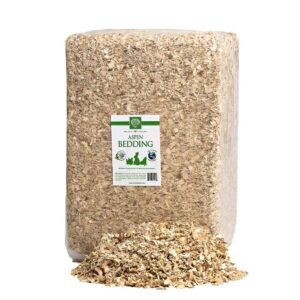
We house degus on kiln dried, dust extracted woodshavings such as Snowflake Supreme. Other safe options include hemp or aspen shavings.
It is important to make your degu’s enclosure interesting and enriching – space is great but it must be filled with things to do!
You should include:
– At least one hide
– Ledges/platforms
– Sand bath
– Tunnels
– Bridges
– Branches
– Metal wheel, at least 16 inches diameter
– Fleece hammocks
Degus are excellent chewers so don’t include anything plastic – wood, cermaic and metal items are safest.
Coming Soon!
Degus require a large cage/enclosure and many marketed as suitable simply are not big enough.
The absolute minimum cage size we will accept is the Liberta Explorer (or cages of the same size – 93cm w x 63cm l x 123cm h without stand). As degus are big chewers, fully metal cages are best, such as:
Liberta Explorer
Little Zoo Venturer
Pet Planet Rat & Ferret Cage
Aventura
Cosy Pet RC03.
The Savic Royal Suite 95, Savic Royal Suite XL and Critter Nation Double are also acceptable size-wise, but the plastic shelves will need to be covered with tiles (or replaced with metal/wooden shelves) and regularly checked for any signs of chewing.

Liberta Explorer 
Little Zoo Venturer 
Cozy Pet RC03 
Aventura 
Savic Royal Suite 95 
Midwest Critter Nation Double
Hay
Hay should make up the majority of degus’ diets and must always be available. We feed a mixture of meadow hay and timothy hay, with the occasional addition of oat grass hay and readigrass or graze-on (dried grass). If your degus don’t eat much hay, try different types, and mix in some forage or pellets to entice them.
Forage
Alongside hay, we feed a daily handful of dried or fresh forage (leaves, herbs, flowers, roots, bark, branches).
Our dried forage mix typically consists of:
Leaves – Plantain, Apple, Echinacea, Raspberry, Nettle, Dandelion, Hazelnut
Roots – Chicory or Dandelion
Bark – Willow or Birch
Flowers – Marigold, Rose, Cornflower, Chamomile, Mallow
In the spring & summer months, we collect fresh leaves and branches such as plantain, dandelion, yarrow, clover, willow, hazel, hawthorn and birch for the goos to enjoy.
Pellets
Pellets should only form a small part of the diet and should be viewed as a supplement, rather than a main food. Too many pellets can lead to obesity and serious dental issues as the degus fill up on these, neglecting the all-important hay. We feed only around 1 tablespoon of pellets per day, alongside a mixture of forage (with hay available 24/7). Pellets containing grains and cereals should be avoided – grass/hay based pellets are best (not alfalfa!) – our favourite brands are Rosewood Naturals Meadow Menu, BunnyNature (available in the UK via Haybox) and Versele Laga.


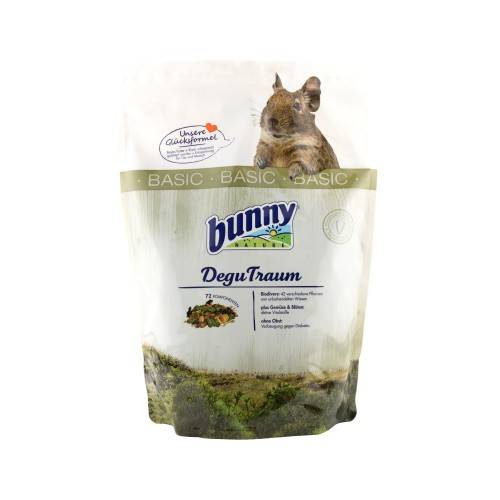
Recommended Sites for Degu Food
Healthy Herby (mention us when purchasing and we’ll receive free hay!) – hay and forage
Timothyhay.co.uk – hay
Hay and Straw – hay
Just4Rabbits – hay and forage
The Hay Experts – hay, forage and pellets
Vetsend – pellets
Haybox – hay, forage and pellets
Nature’s Grub – forage in bulk!
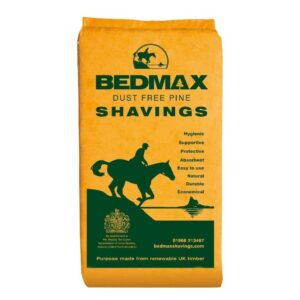
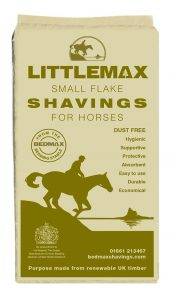
We house our degus on hemp or cardboard substrate. Other options include kiln dried woodshavings such as Bedmax or Littlemax (other standard pet shop pine woodshavings are not considered safe as they can cause respiratory issues), aspen shavings, or chopped rapestraw (Raviera).
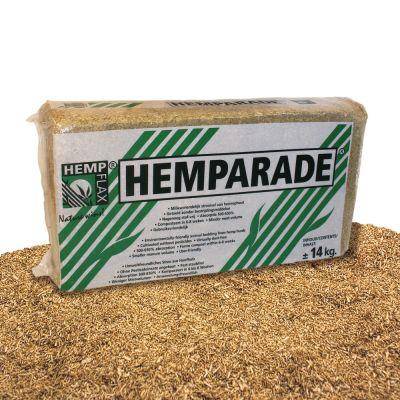
Hemparade 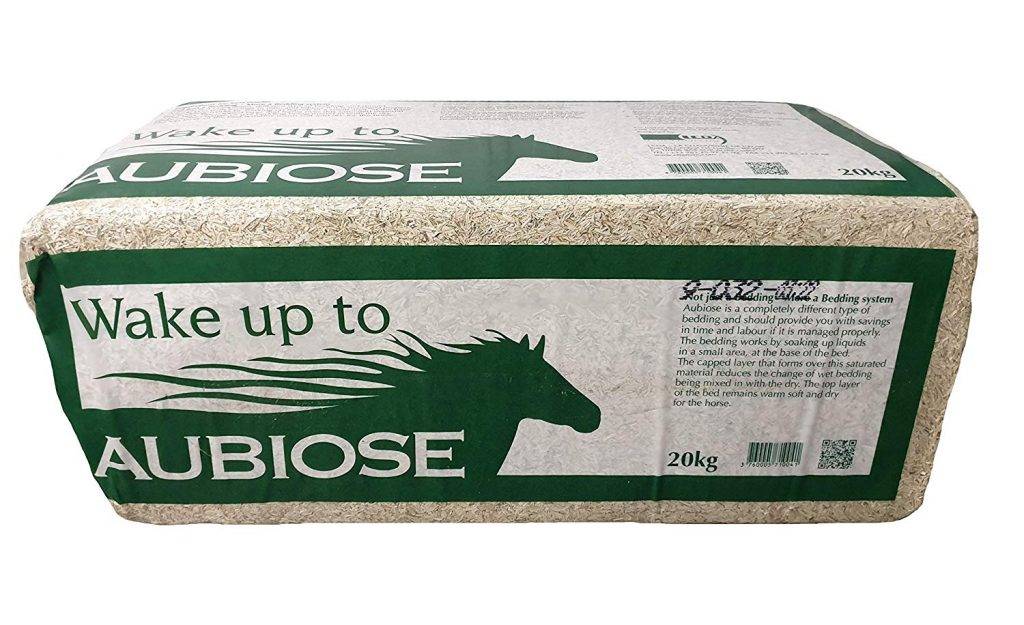
Aubiose 
Raviera 
Hemp Shiv 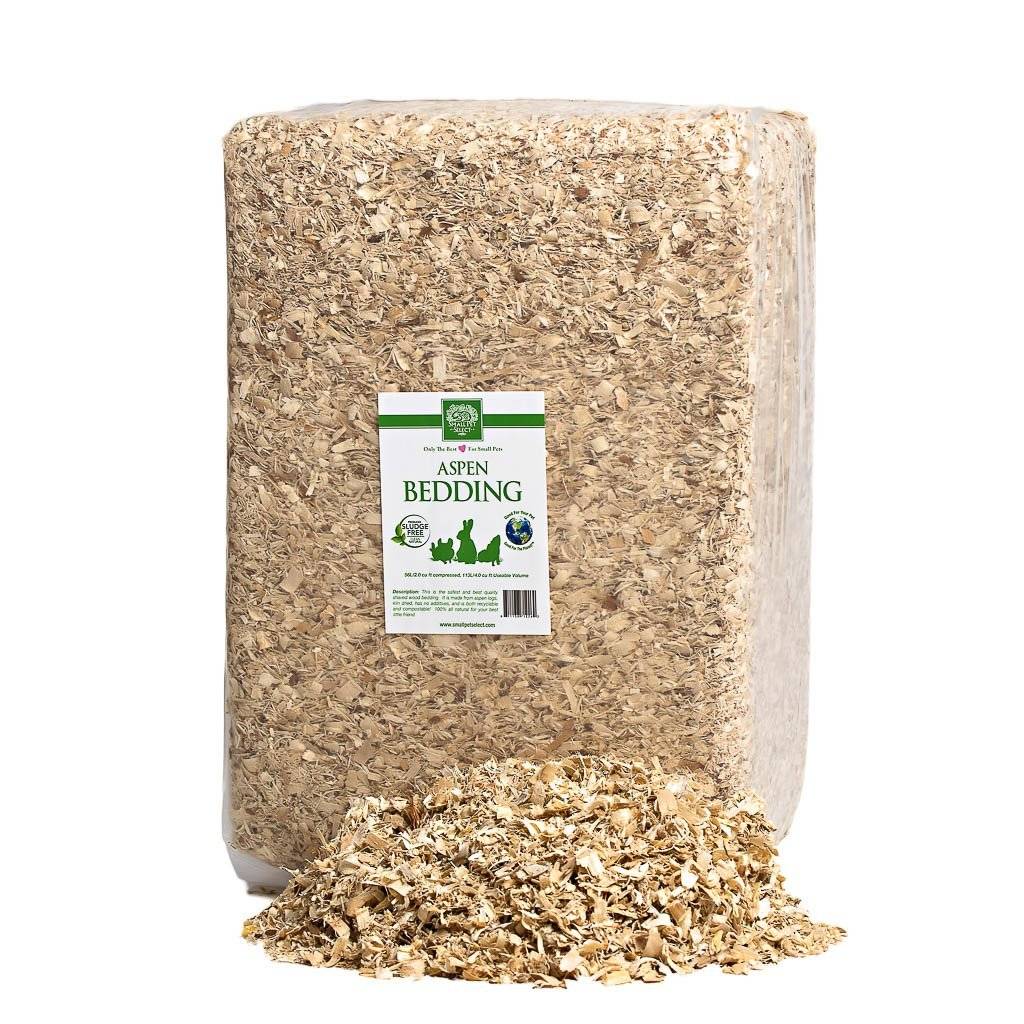
Small Pet Select Aspen Shavings 
Littlemax 
Bedmax 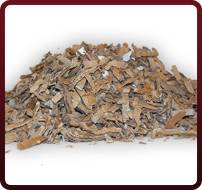
Finacard 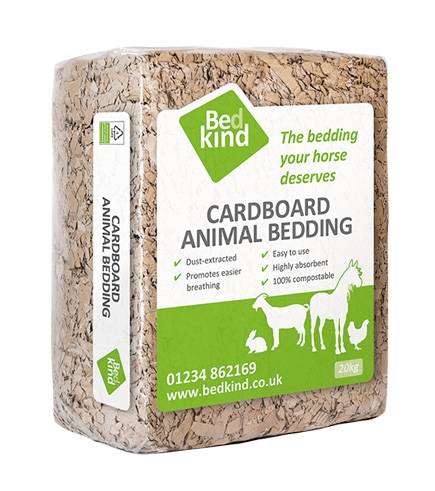
Bedkind Cardboard Bedding