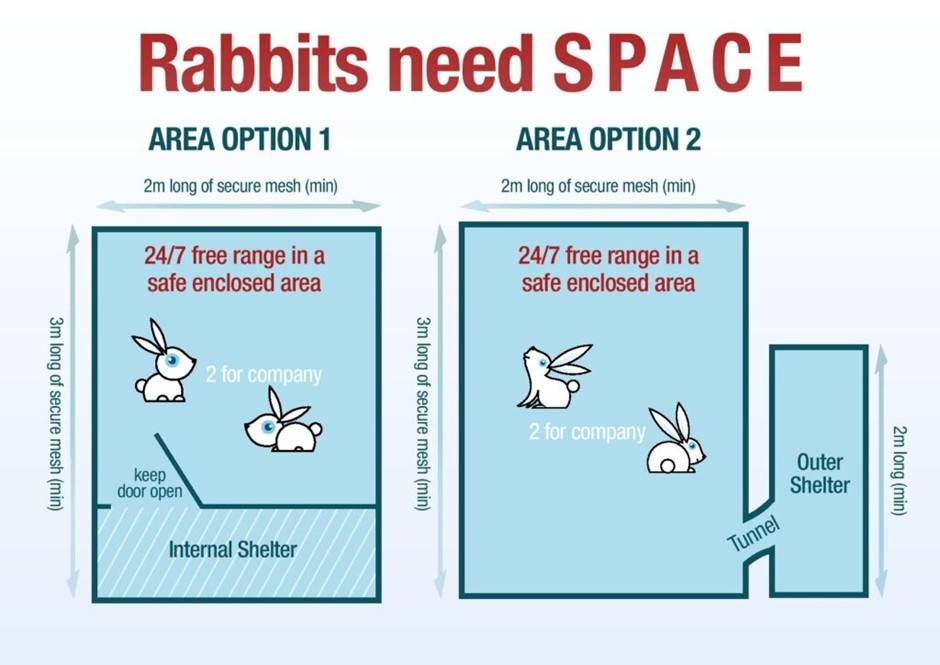
Rabbits need as much space as possible so that they can carry out all their natural behaviours and live a long, healthy, happy life. At a minimum, a pair of rabbits need permanent access to 3m x 2m (10ft x 6ft) of living space, so a traditional hutch is not suitable.
Outdoor Rabbits
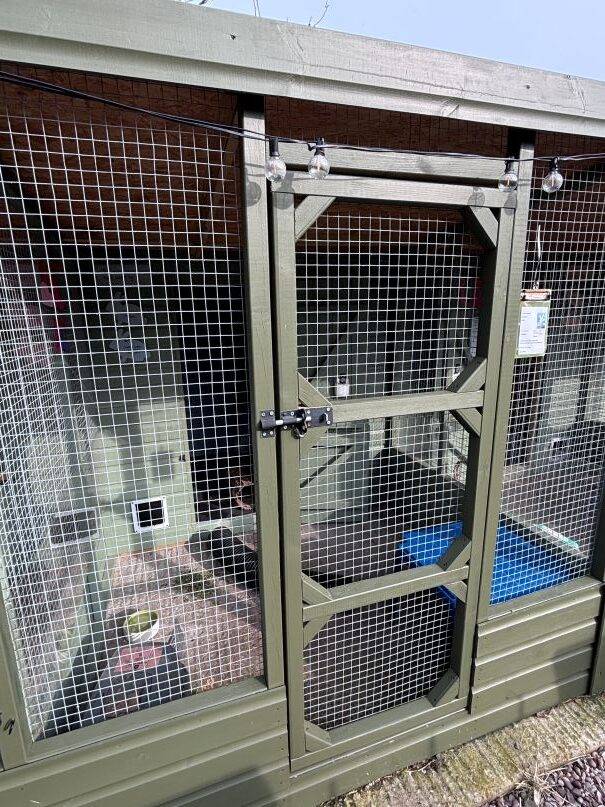
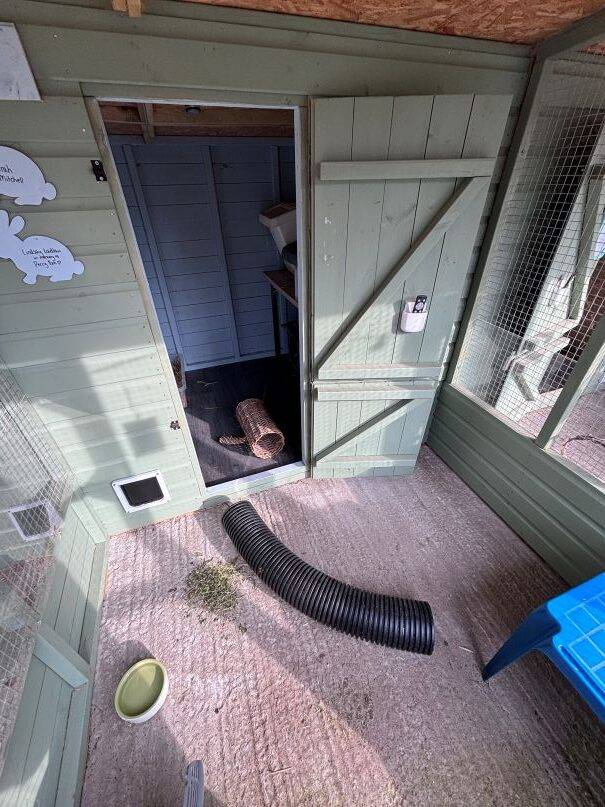
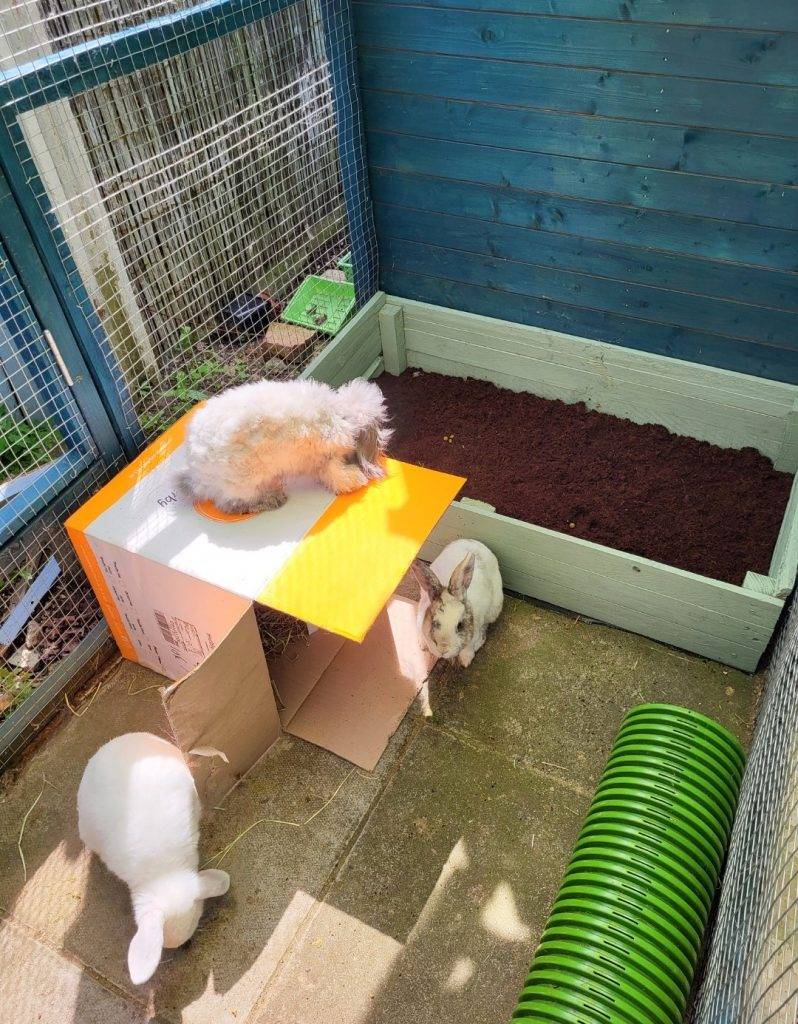
Outdoor rabbit setups must be secure, predator proof and provide sufficient protection from the elements. The enclosure needs to be at least 3m x 2m, which should include a cosy sheltered area of at least 6ft x 2ft such as a shed/wendy house/kennel/hutch (which must never be closed) or have a sheltered area attached.
All wire mesh must be galvanised and at least 16 Gauge (16G) to be considered fox-proof, and have 1″ or smaller sized holes. Runs/aviaries that the buns have permanent access to as part of their main set-up must either be on slabs/concrete or have wire mesh dug under the grass to prevent predators digging in or buns burrowing out! Runs must be at least 1m (3ft) in height to allow for binkying and periscoping, and all outdoor enclosures need a roof.
Outdoor setup ideas:
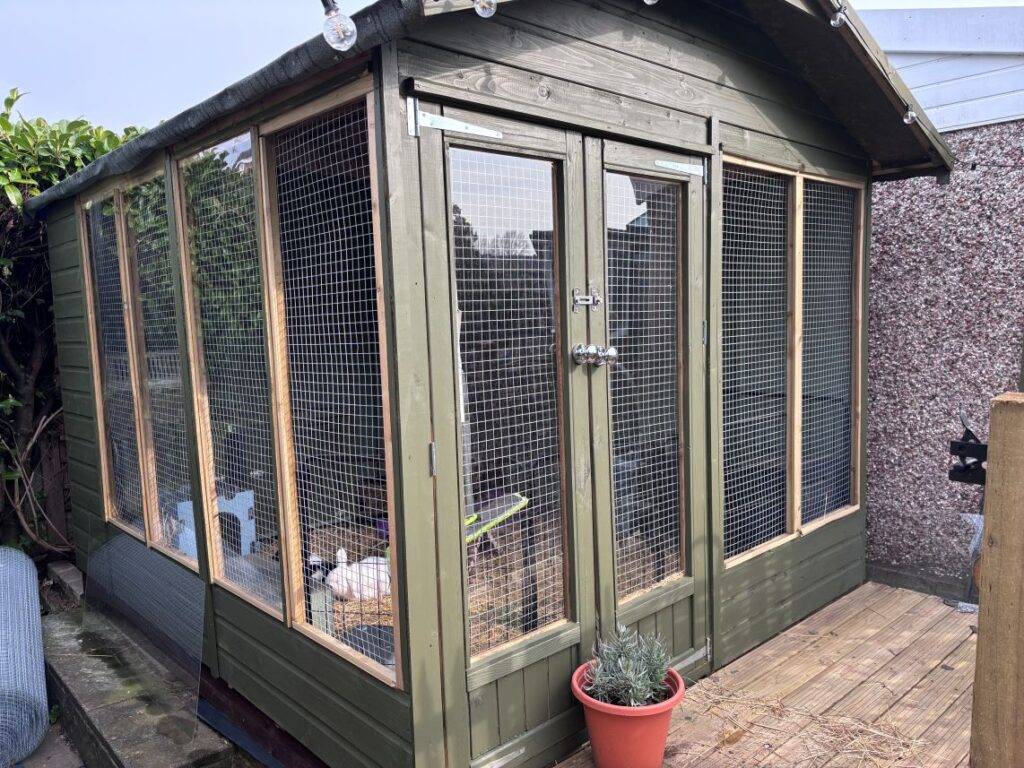
– Shed or Wendy House with aviary/run directly attached
– Kennel & run style setup
– Aviary with hutch of at least 6ft x 2ft inside
– Converted summerhouse
For more outdoor rabbit set-up ideas, and predator-proofing tips, please visit the Rabbit Welfare Association’s housing pages: https://rabbitwelfare.co.uk/rabbit-housing/outdoor-rabbit-housing
We do not adopt out rabbits to situations where they will be allowed to free-roam in the garden unsupervised. To be clear, the 3m x 2m requirement is for a predator proof enclosure which the rabbits can access 24/7. The requirement cannot be met by allowing the rabbits free roam of the garden. Foxes and other predators can and will clear 6ft+ fencing/walls and this is not a risk we will place our rabbits under.
Supervised free roam (i.e. you are in the garden with the rabbits, watching them at all times) of an enclosed fenced garden is great, in addition to a suitable secure enclosure meeting the above requirements.
Outdoor housing checklist
- 3m x 2m space minimum (on one level – additional platforms do not count towards this)
- Galvanised 16G (or stronger) mesh with 25mm holes, or smaller if weasels/stoats are a concern
- Run/aviary is situated on slabs/concrete or wire mesh buried under grass to prevent predators digging in/buns burrowing out
- Run/aviary has either a mesh (16G minimum) or solid roof
- Sheltered area is at least 6ft x 2ft x 2ft
- Run height is at least 1m (3ft)
- Rabbits have 24 hr access to the entire 3m x 2m
Housing suppliers
– Happy Habitats Pet Housing
– 4Wire
– Duchy Farm Kennels (request 1″ or smaller mesh)
– Cherry Acres Animal Housing
– Shropshire Pet Housing
Please note not all housing these suppliers provide is suitable, but they can provide enclosures that meet requirements!
Indoor Rabbits
Rabbits can live happily indoors as long as you are able to provide a large (remember the 3m x 2m rule!) bunny-proof living space. Many humans allow their bunnies to free-roam their house, however please be aware that this may not suit all rabbits – many will prefer their own space and if they have not lived indoors before, they may find sharing a living space with humans a little scary. Our preference is for indoor rabbits to have their own bunny-proof room or pen (either must be at least 3m x 2m), filled with enrichment, hides, hay etc. They can then be allowed to explore the rest of your home outside of their bunny-base under your supervision, while still being able to retreat back into their own safe area.
Indoor rabbits may well chew wires, wallpaper, skirting boards, carpets, and other valuable human goods, so you’ll need to be prepared to bunny-proof their living space.
For more indoor rabbit set-up ideas, please check out the Rabbit Welfare Association’s housing pages: https://rabbitwelfare.co.uk/rabbit-housing/indoor-rabbit-housing
https://www.pinterest.co.uk/tinypawsm/outdoor-rabbit-housing/
Hay
85% of a rabbit’s diet should be made up of hay and/or grass. Eating hay/grass requires the rabbit to chew in a side-to-side motion, which wears down the ever-growing teeth, preventing dental issues. Pellets and veg do not require this side-to-side chewing motion, and also don’t include as much of the long-strand
fibre which is also essential for gut health. Hay/grass must therefore be the main part of a rabbit’s diet!
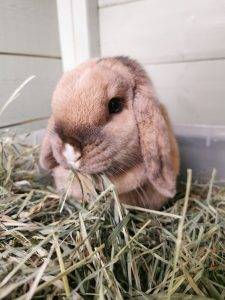
If your rabbit doesn’t eat much hay, try different brands and types – meadow, timothy, orchard, oat, ings, dried grass – there are many options and usually one will tempt your bun. It can also help to mix in fresh or dried forage or your rabbit’s pellets, and provide multiple hay feeding stations in their enclosure so it is everywhere they turn!
We recommend buying hay by the bale or in bulk boxes – this will save you money and the hay will be better quality than the small plastic wrapped packs you find in pet shops. Try local farm shops and horse food stores.
Green plants, herbs & forage
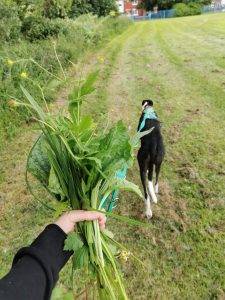
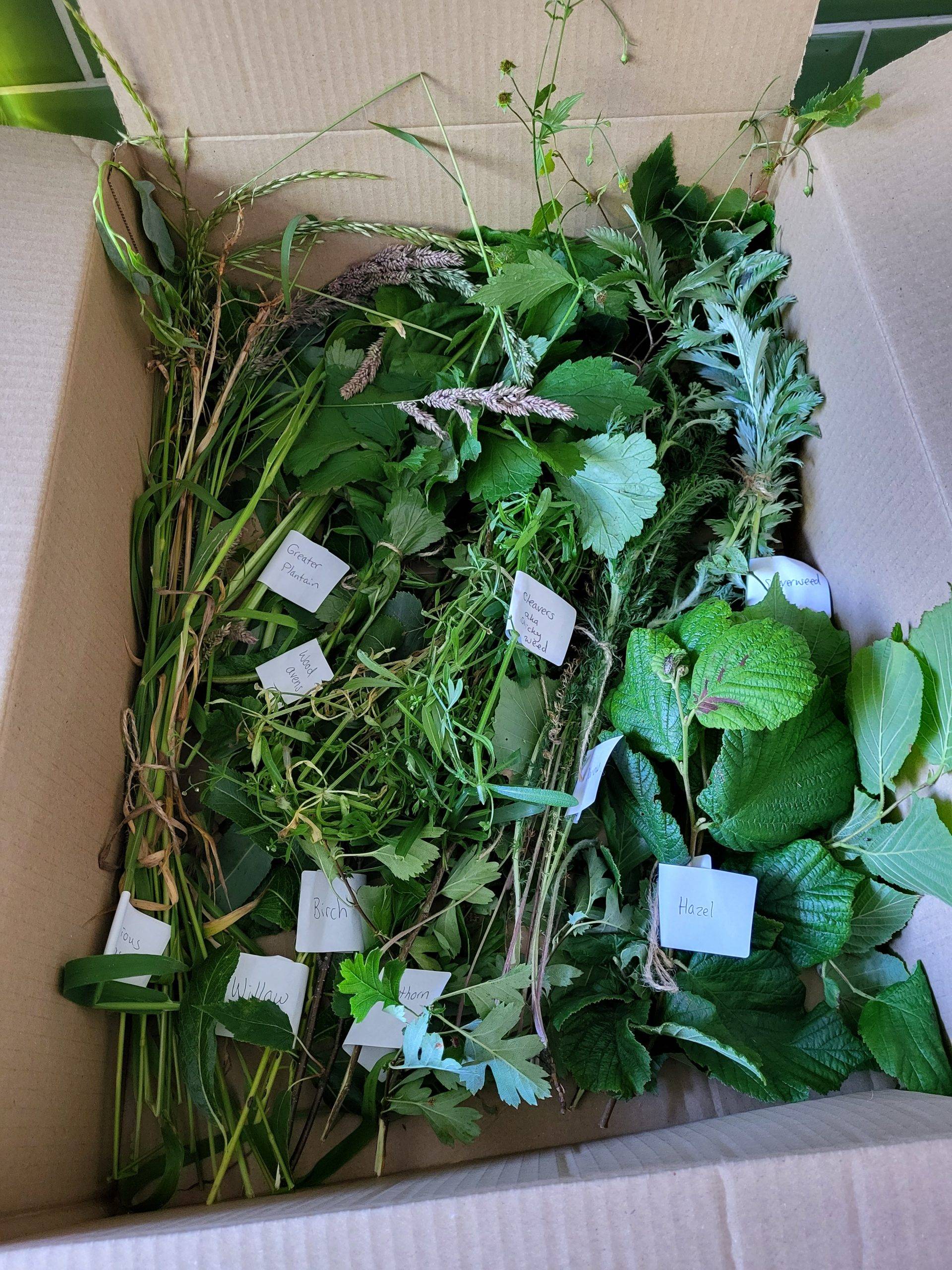
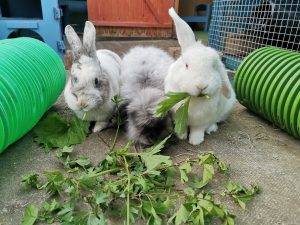
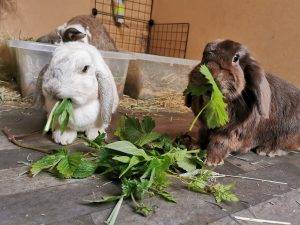
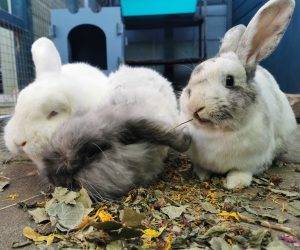
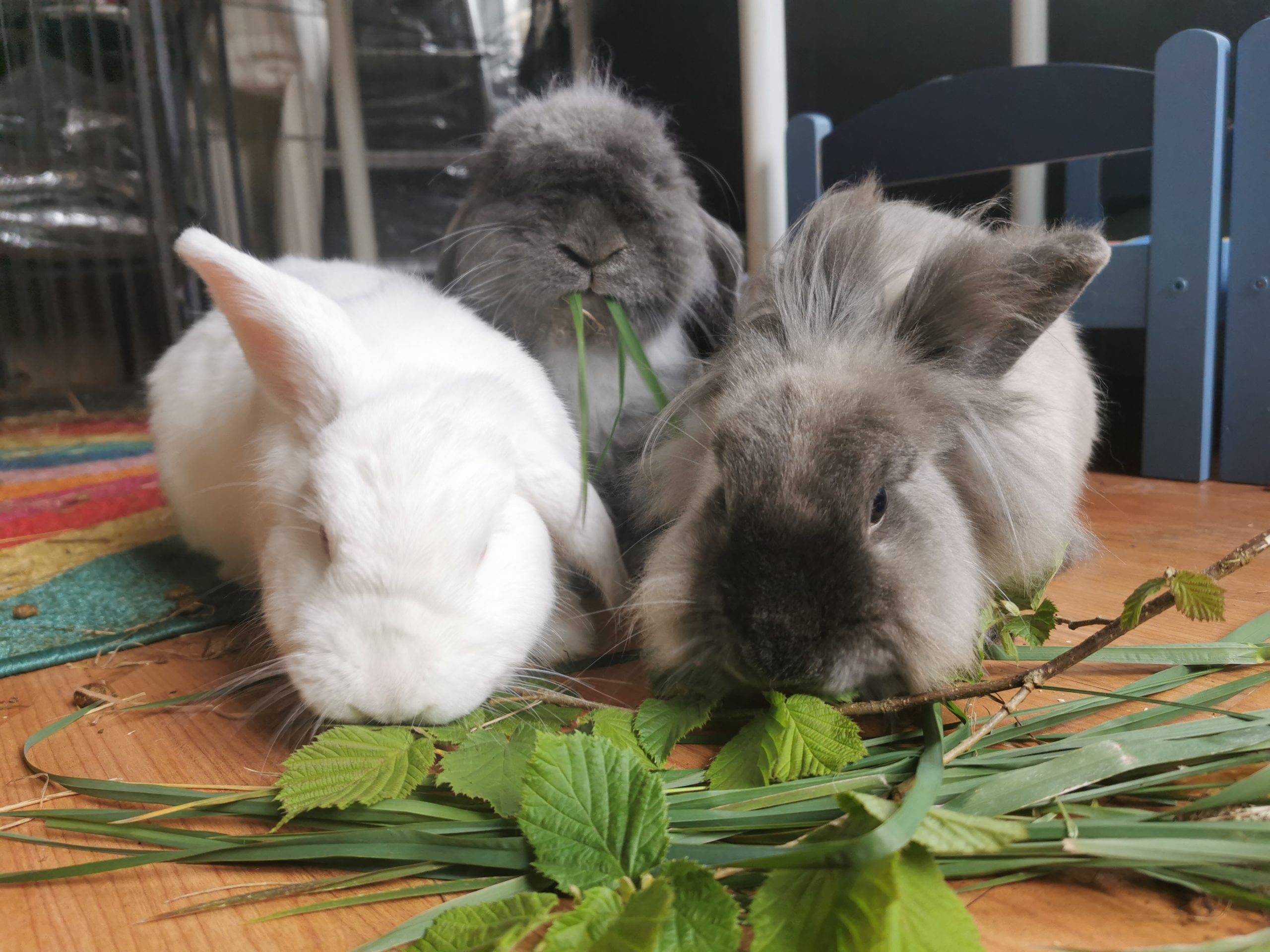
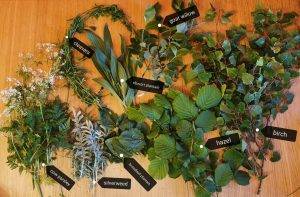
After hay, rabbits should be provided with a variety of green plants and herbs. The best greens are those that a rabbit would find in the wild, and you can pick a lot of these yourself in your garden/parks/woodlands etc. Supermarket greens and herbs are acceptable, but we highly recommend feeding wild plants as often as possible, and also including safe tree branches, bark, and roots as would be eaten in the wild.
The following links provide lists of safe wild plants and recommended greens/veg/herbs:
Edible Plants for Rabbits – Frances Harcourt Brown
Recommended veg & herbs – Rabbit Welfare Association
What to Feed Your Rabbits – Wood Green
Wild plants can also be fed dried, which is useful during the autumn/winter months. There are many great online stores for purchasing dried forage (see list at bottom of page).

Pellets
Healthy adult rabbits who consume sufficient hay and are fed a variety of safe greens/forage will not require any pellets at all – our aim is always to wean rabbits off pellets when they come into our care and onto a majority hay based diet. If you do feed pellets, feed a very small amount, or use them as treats, in a puzzle game or scatter them around their enclosure and hide them in their hay to encourage foraging! Too many pellets can lead to obesity and serious dental issues as the rabbits fill up on these, neglecting the all-important hay. Pellets containing grains and cereals should be avoided – grass/hay based pellets with plenty of long-grain fibre are best.
Recommended Rabbit Food Sites
The Hay Shed
Nature’s Own Pets
timothyhay.co.uk
Hay-and-Straw.co.uk –
Haybox
Bunny Bistro
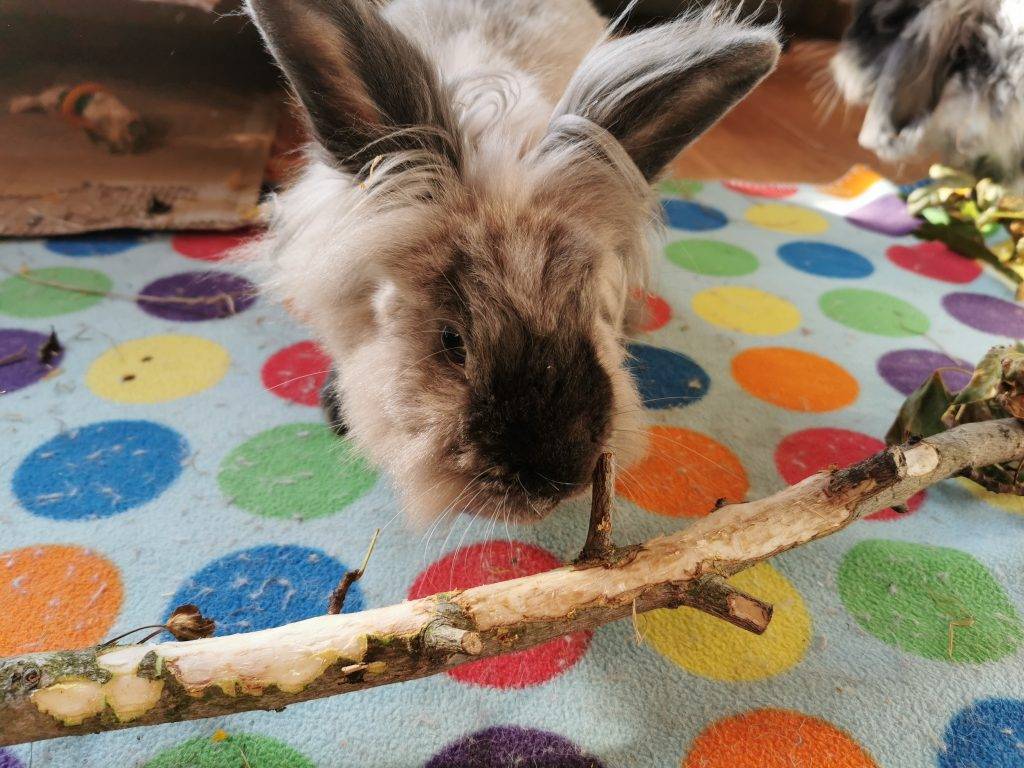
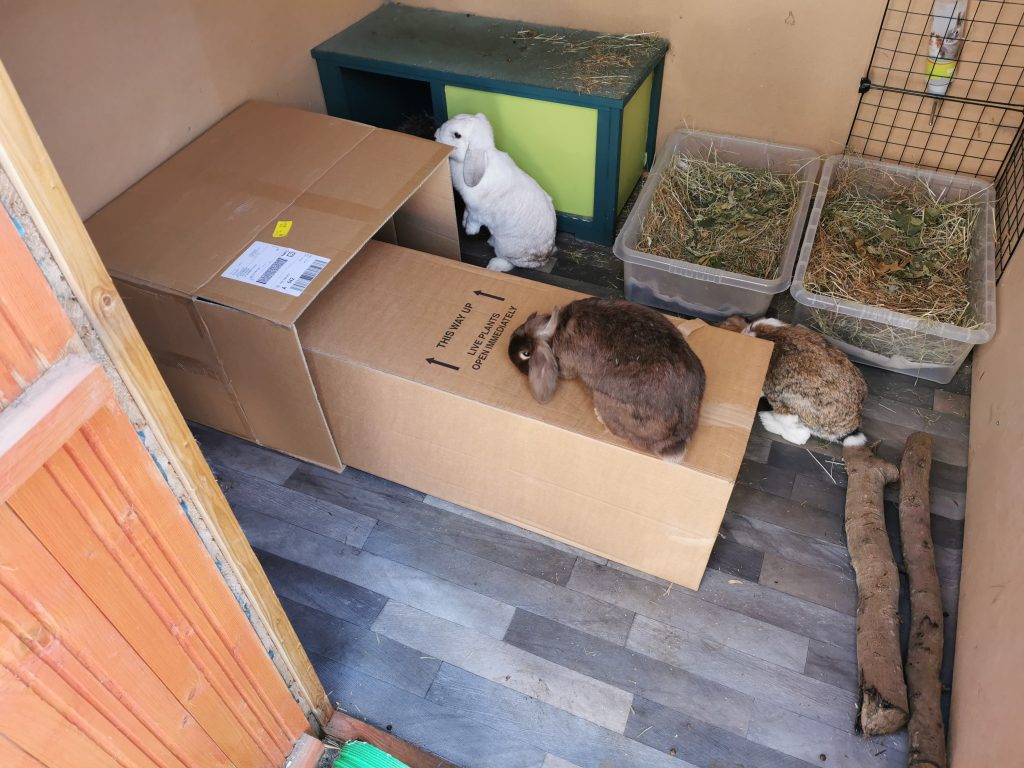
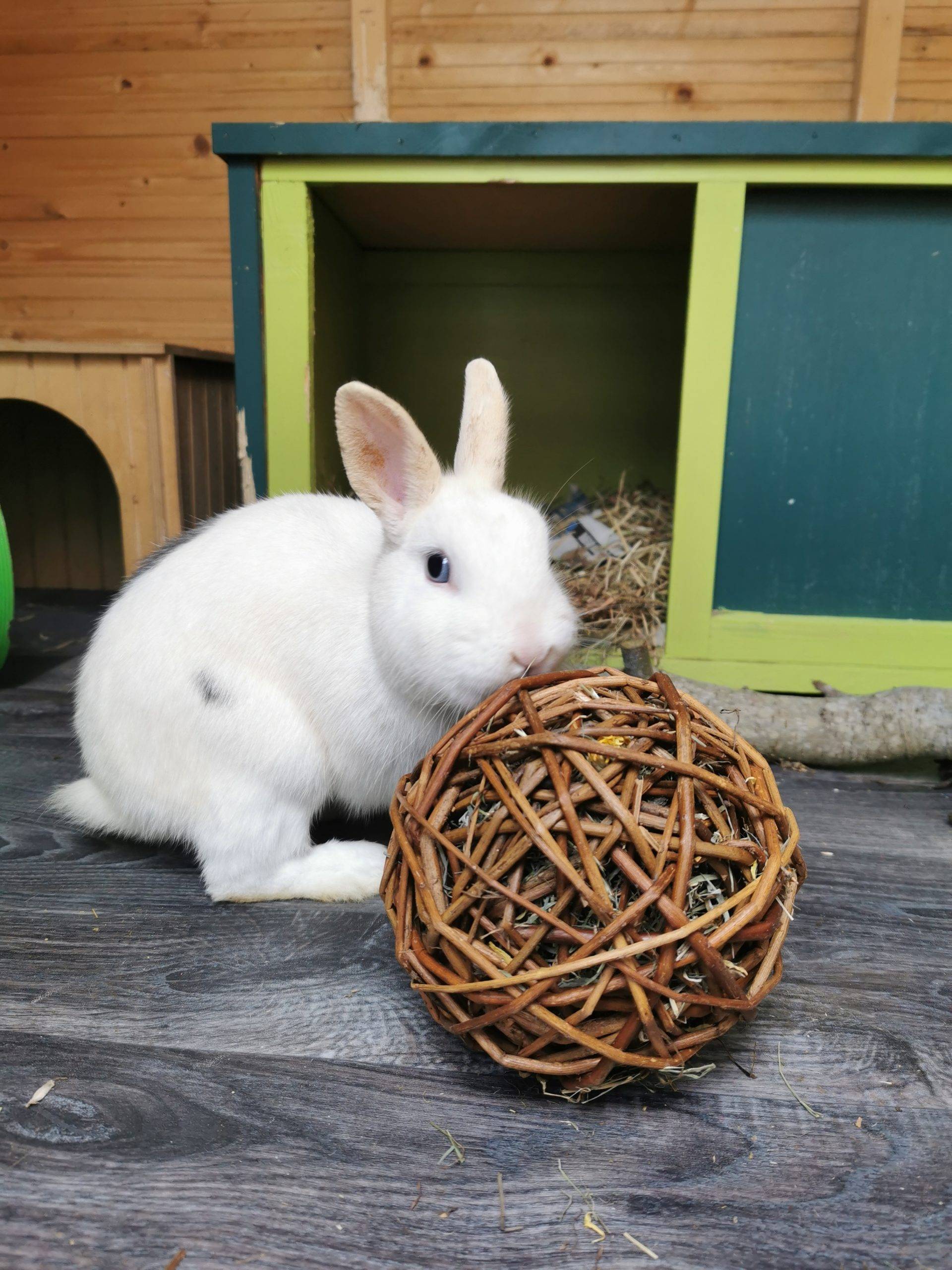
As well as sufficient space (at least 3m x 2m), rabbits need enrichment in their enclosure – hides, tunnels, platforms, digging trays, hays/grasses to graze on, things to chew, etc, to allow them to display natural behaviours.
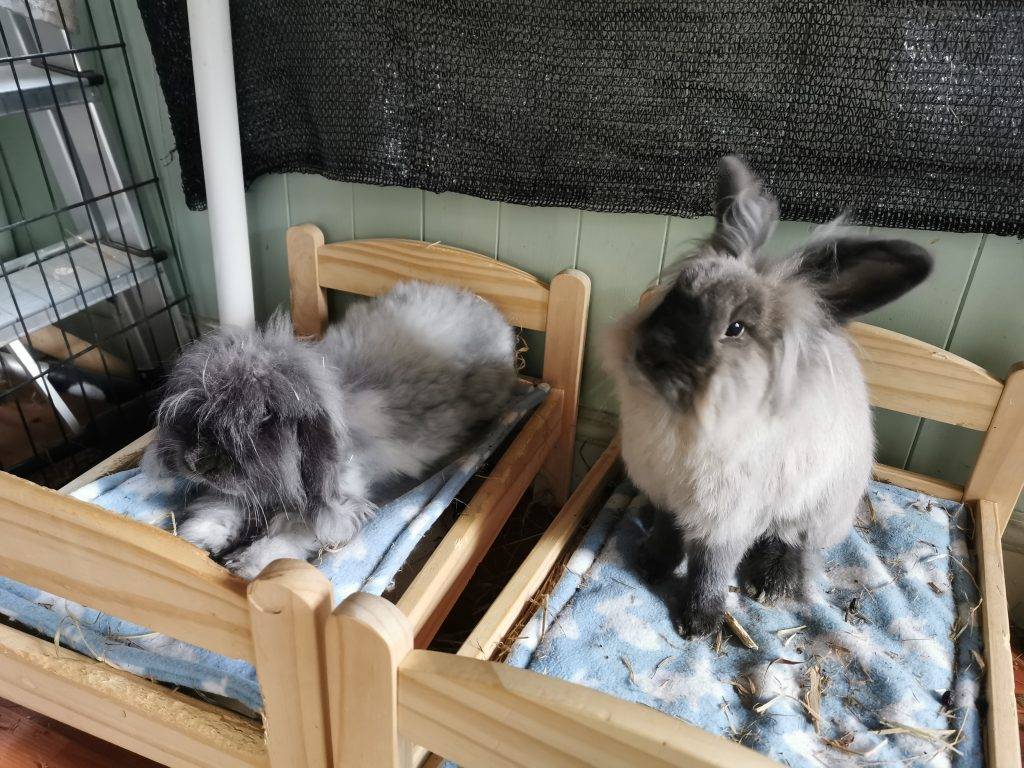
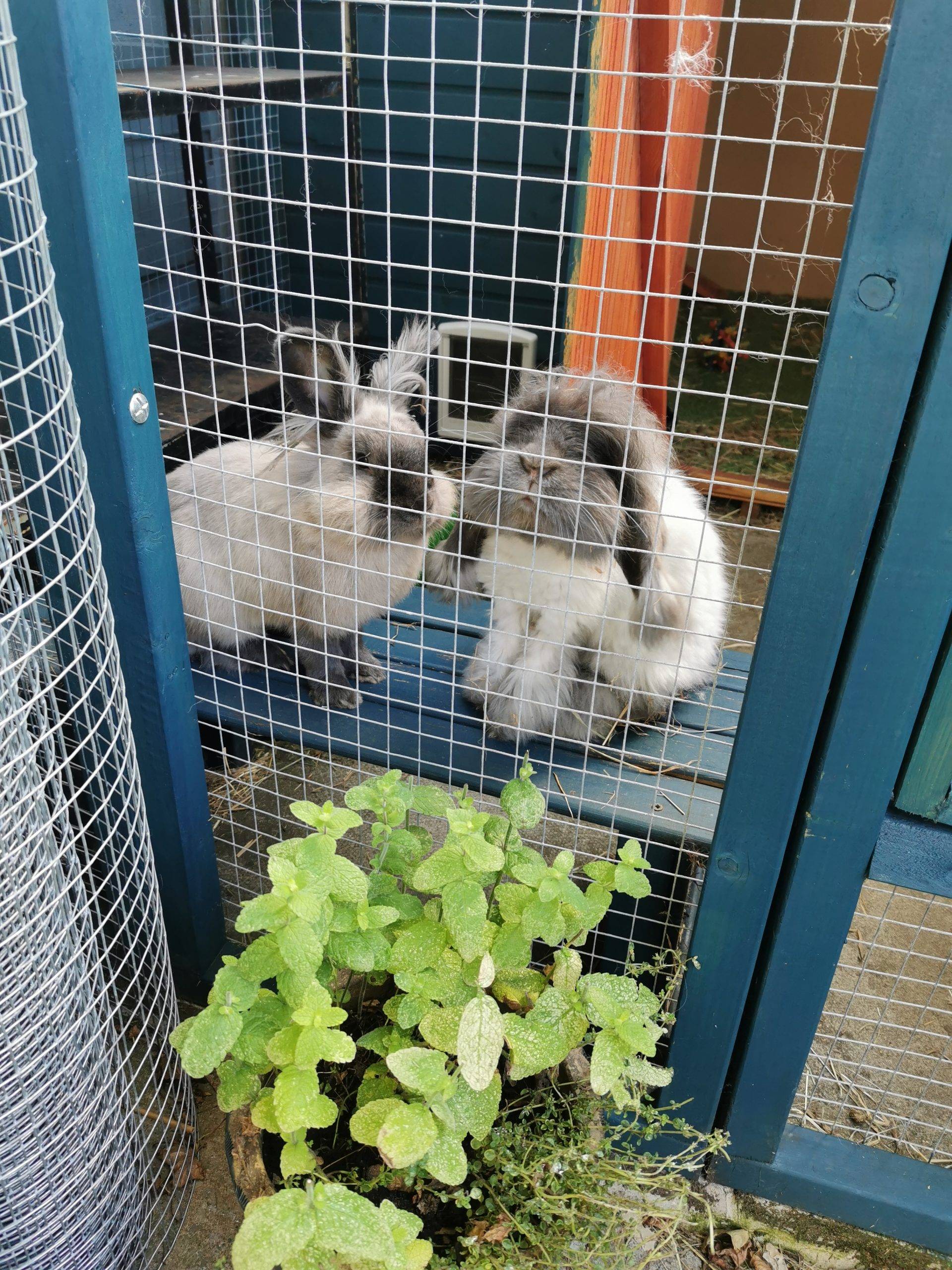
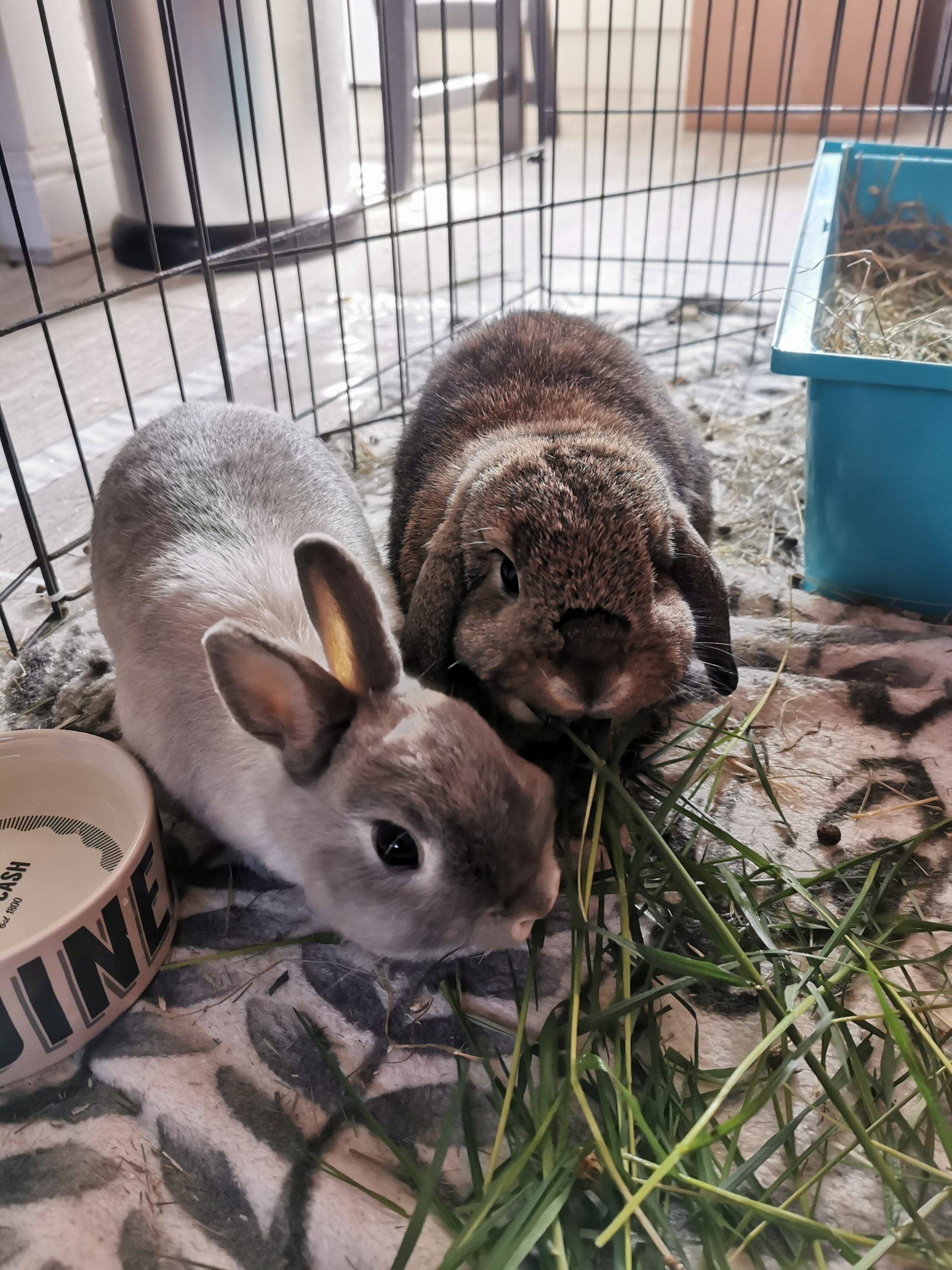
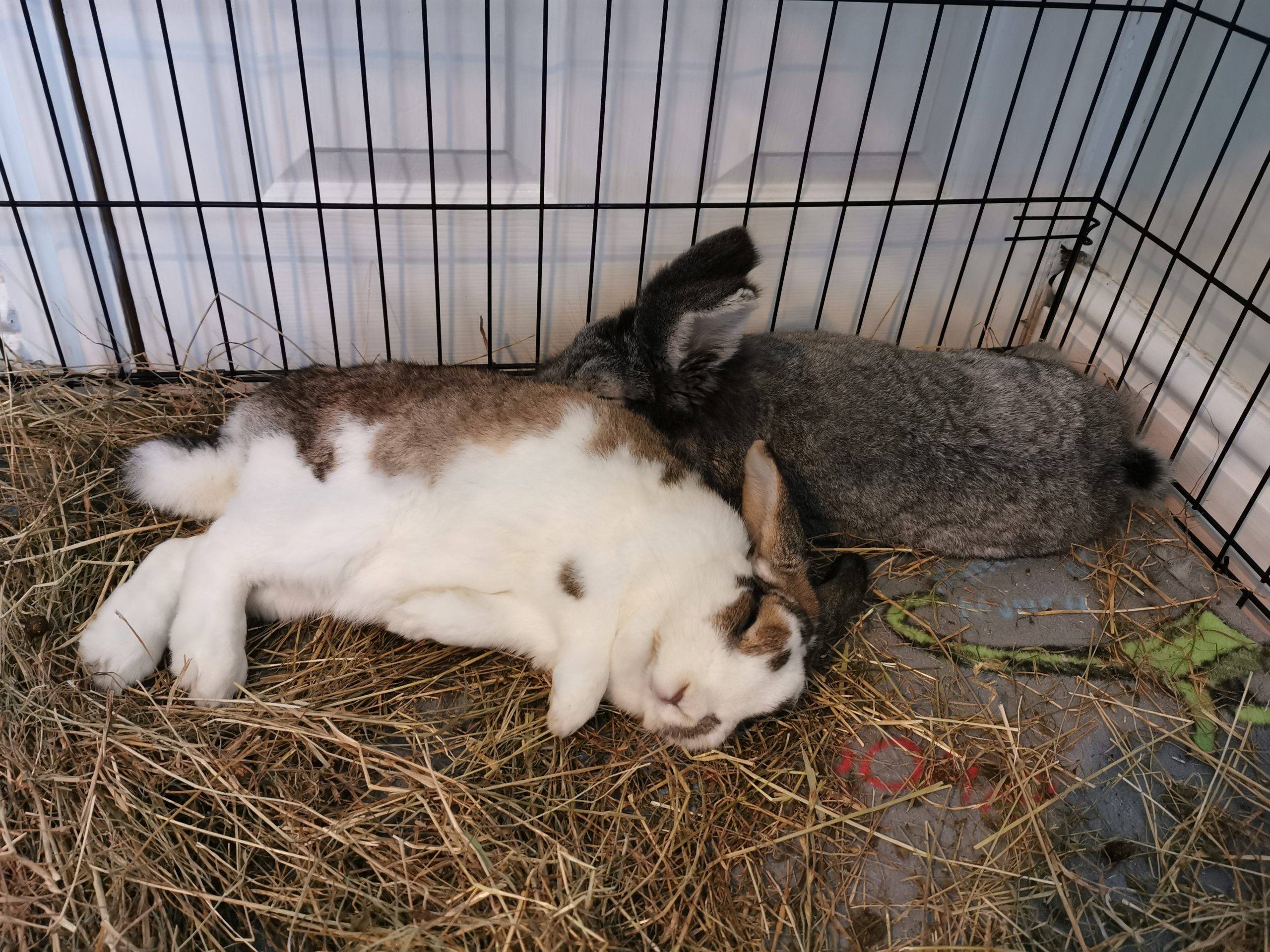
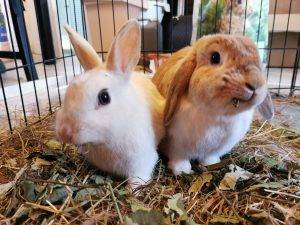
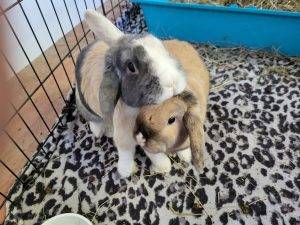
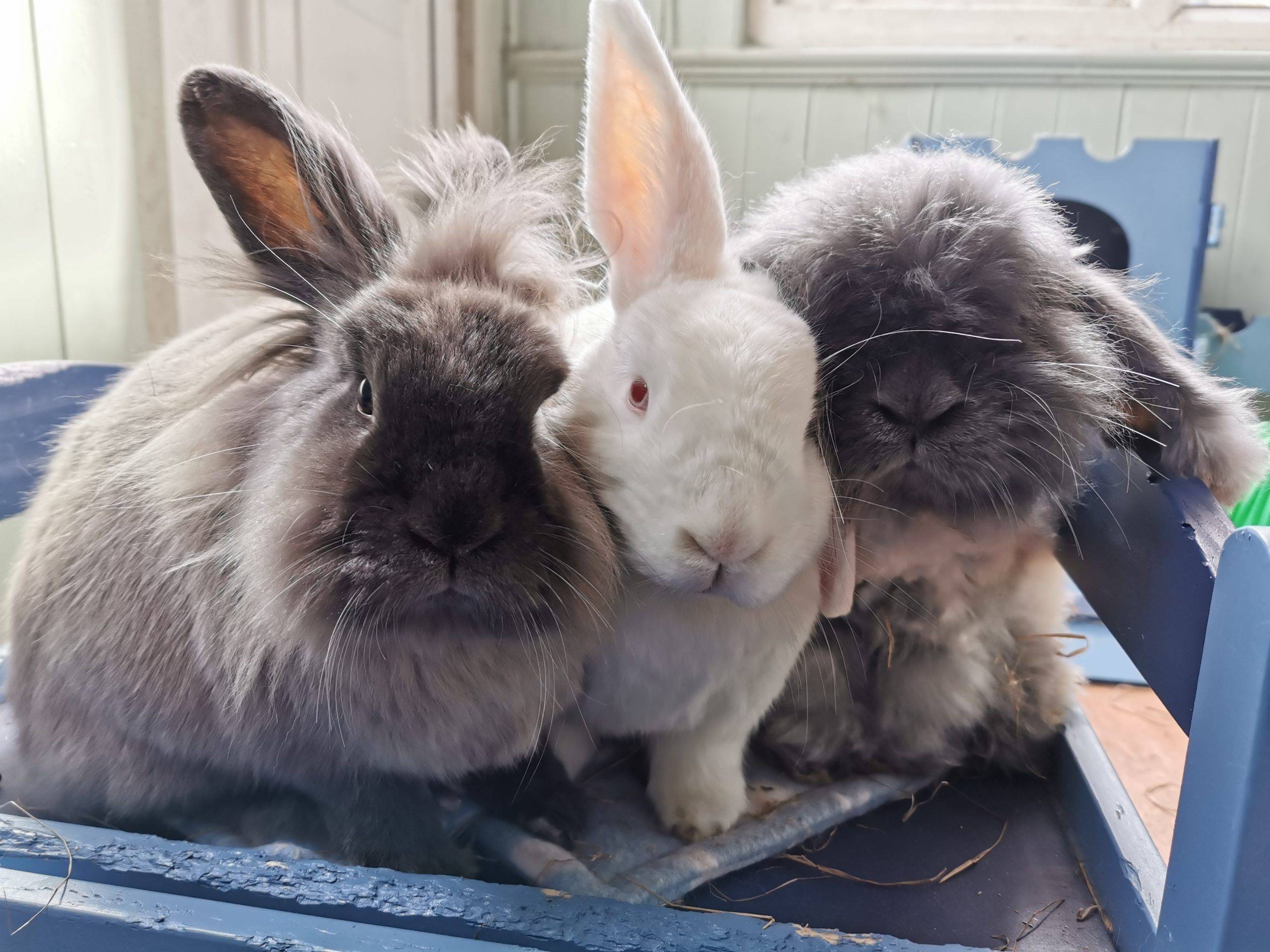
Rabbits are highly social animals and should never live alone.
Both males and females must be neutered whether bonded in same or mixed-sex pairs/groups. Bonding can be tricky, so we provide an initial bonding service for anyone adopting a rabbit from us to join their existing rabbit(s).
We have tried various bonding methods over the years and find that for most rabbits, starting in a small neutral area and keeping the buns together under 24/7 supervision, then gradually increasing the size of enclosure works much better than side-by-side/dating methods. No method is 100% guaranteed to work for all rabbits and sometimes, it’s just not a good match and it’s best to try another potential friend! This is one of many reasons it is so important to adopt from a rescue if you have a single bunny looking for a friend – no one wants to be left with two single rabbits who then each need a new companion!
While it was often thought that a neutered male – neutered female pairing is best any combination of neutered rabbits can work, as can trios or larger groups.
Rabbits must be vaccinated annually against Myxomatosis, RVHD1 & RVHD2.
Register your bunnies with an exotics vet trained to treat rabbits.