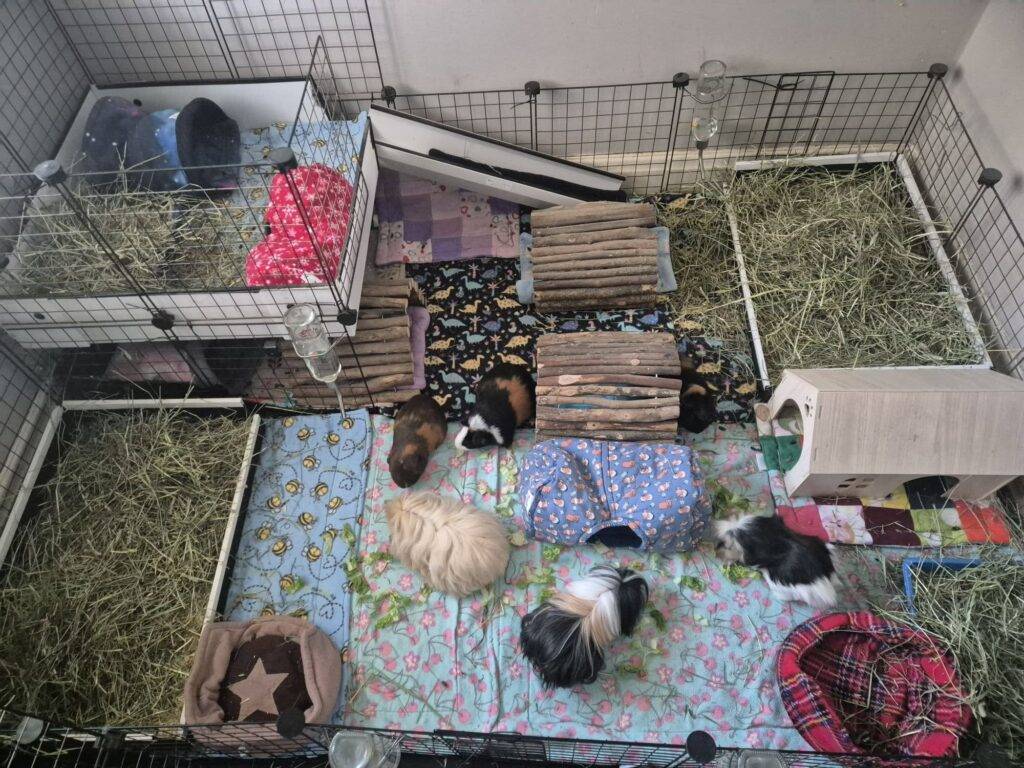
Guinea pigs need lots of space on one level to zoom around and popcorn. Our minimum housing size requirement for a pair of pigs to 20 square feet (2m square) on one level.
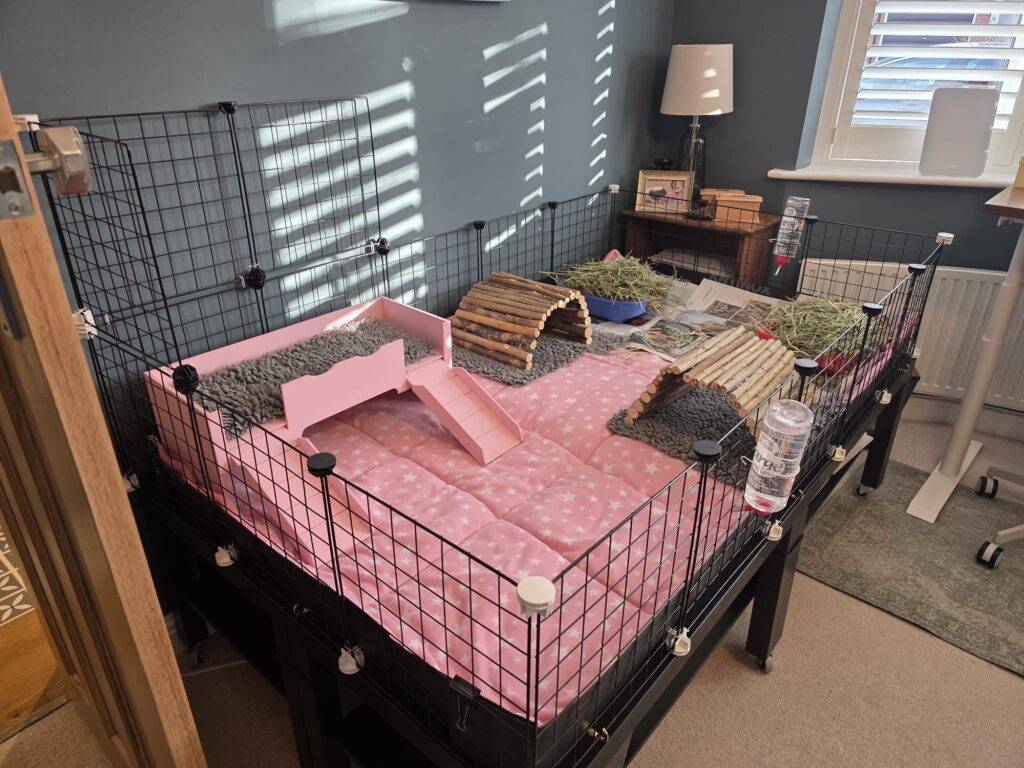
C&C Cages
One of the most cost effective ways to provide an ample amount of space for your pigs is by building a C&C cage. 5 grids x 3 grids would meet our minimum requirement of 20 sq ft for 2 pigs.
The sides are made out of storage cube grids clipped together, and the base is made from correx/corrugated plastic used for making signs. The base can then be lined with a safe substrate, or a fabric such as fleece over towels which are washed as needed and re-used, cutting down on waste.
You can purchase ready made C&C cages or build your own – you can buy the grids from Amazon and correx base from Homebase or Wickes. Check out the how-to guide at http://www.guineapigcages.com/howtometric.htm
Outdoor Housing
Care must be taken when housing piggies outdoors, as they are particularly sensitive to heat and cold. However, it is possible to provide well insulated, ventilated and predator-proof outdoor housing, by keeping your piggies in a shed, garage, outbuilding or playhouse with a heat source for winter, which you could also attach a run to. All mesh on outdoor housing must be galvanised 16 gauge (16G) mesh to be considered fox-proof and floors must be solid or have fox-proof mesh dug down underneath any grass.
https://uk.pinterest.com/tinypawsm/outdoor-guinea-pig-housing/
The majority of a guinea pig’s diet should be made up of hay and/or grass.
Eating hay/grass requires the guinea pig to chew in a side-to-side motion, which wears down the ever-growing teeth, preventing dental issues. Pellets and veg do not require this side-to-side chewing motion, and also don’t include as much of the long-strand fibre which is also essential for gut health. Hay/grass must therefore be the main part of a guinea pig’s diet!
If your pig doesn’t eat much hay, try different brands and types – meadow, timothy, orchard, oat, ings, dried grass – there are many options and usually one will tempt your bun. It can also help to mix in fresh or dried forage or your guinea pig’s pellets, and provide multiple hay feeding stations in their enclosure so it is everywhere they turn!
We recommend buying hay by the bale or in bulk boxes – this will save you money and the hay will be better quality than the small plastic wrapped packs you find in pet shops. Try local farm shops and horse food stores.
Unlimited hay should be available at all times. We buy meadow hay in bales from a horse feed shop (we also recommend trying farm shops) as well as boxes of timothy hay from The Hay Shed.
Green plants, herbs & forage
After hay, guinea pigs should be provided with a variety of green plants and herbs.
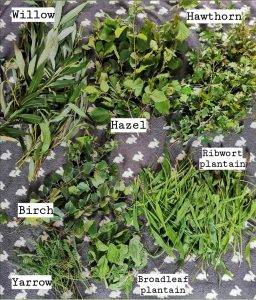
The best greens are wild plants, and you can pick a lot of these yourself in your garden/parks/woodlands etc. Supermarket greens and herbs are acceptable, but we highly recommend feeding wild plants as often as possible, and also including safe tree branches, bark, and roots as would be eaten in the wild.
The following links provide lists of safe wild plants and recommended greens/veg/herbs:
Edible Plants for Rabbits – Frances Harcourt Brown
Recommended veg & herbs – Rabbit Welfare Association
What to Feed Your Rabbits – Wood Green
Wild plants can also be fed dried, which is useful during the autumn/winter months. There are many great online stores for purchasing dried forage (see list at bottom of page).
Pellets
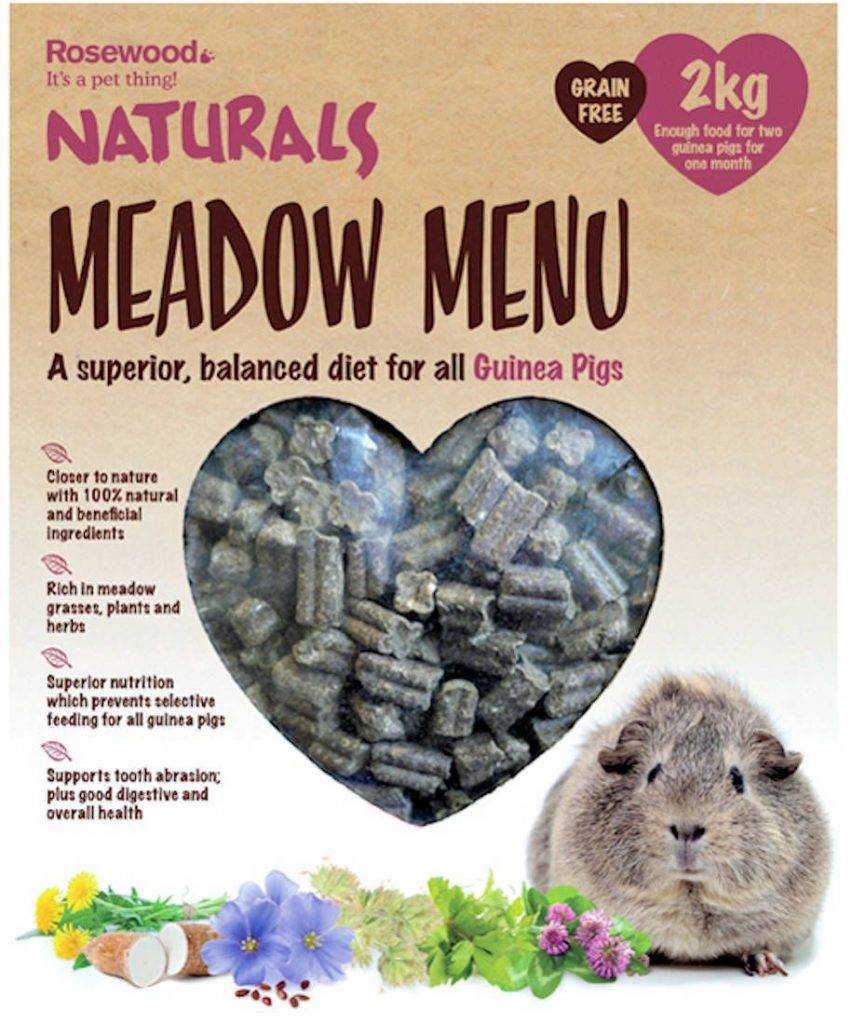
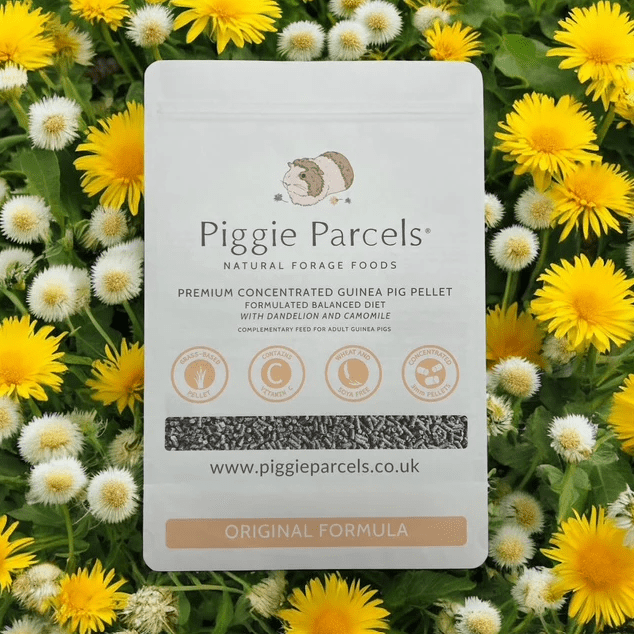
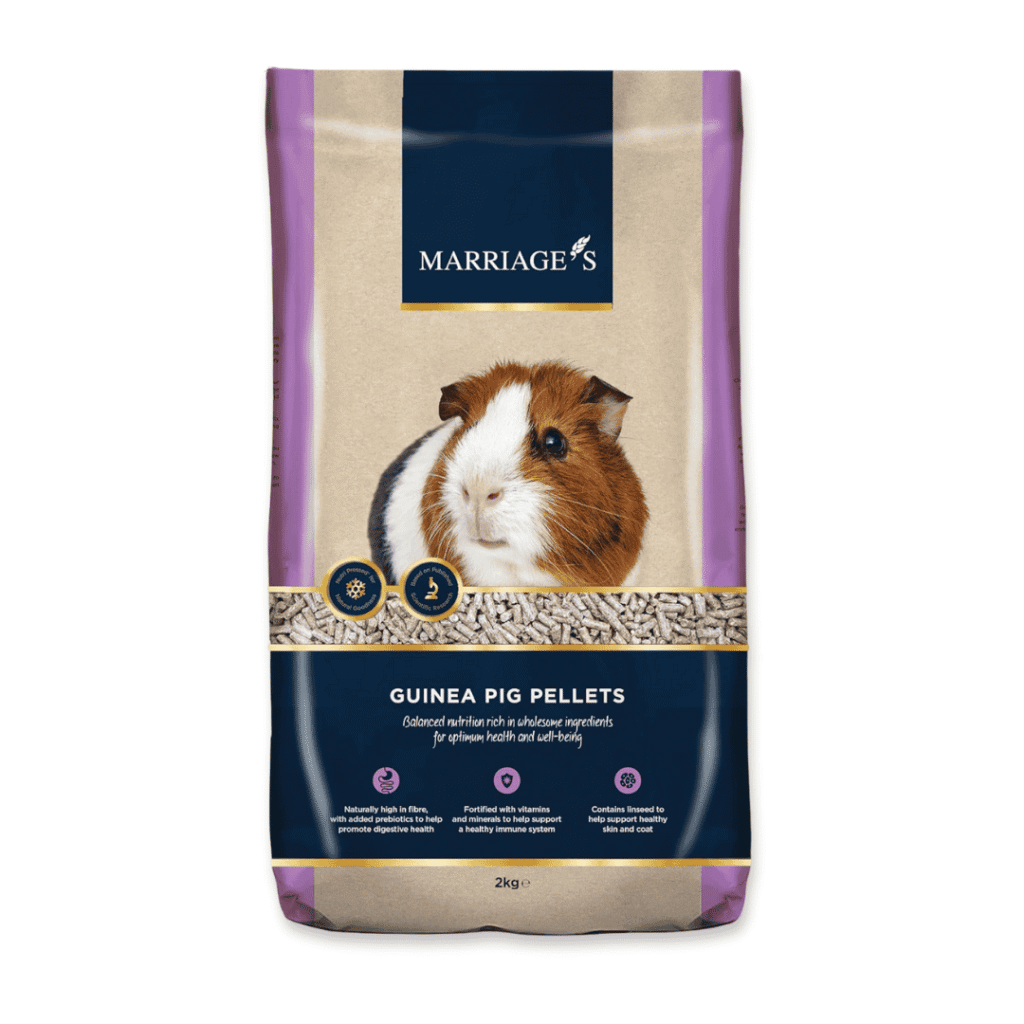
Pellets should not form the main part of a guinea pig’s diet – they should be viewed as a supplement and fed a max of 1tbsp a day. Pellets can be used as treats, in a puzzle game or scatter them around their enclosure and hide them in their hay to encourage foraging! Too many pellets can lead to obesity and serious dental issues as the pigs fill up on these, neglecting the all-important hay. Pellets containing grains and cereals should be avoided – grass/hay based pellets with plenty of long-grain fibre are best. Below are some grass/hay based options.
Recommended Guinea Pig Food Sites
The Hay Shed
Nature’s Own Pets
timothyhay.co.uk
Hay-and-Straw.co.uk
Haybox
Bunny Bistro
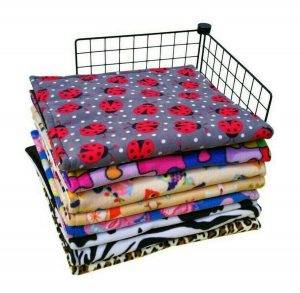
Our favourite option for piggy bedding is fleece! We line our set-ups with a towel and then a fleece blanket over. The idea is that the piggies’ wee wicks through the fleece and is absorbed by the towel. To make this work, when you buy new fleece you will first need to wash it a few times with washing powder/detergent and no fabric conditioner – Cali Cavy Collective have a useful guide on prepping fleece for pigs.
We sweep poops up off the fleece daily, and change out/wash the towels & fleece at least weekly. The same method applies to other fabric based bedding options (vet bed or bath mats, for example).
While piggies can’t really be litter trained, placing their hay in a litter tray lined with some newspaper and wood/paper pellet litter will help the majority of poops and pees to end up in the tray while they sit and nibble away.
If you don’t want to use towels and fleece, you can buy ready made fleece liners with an absorbent layer, just google guinea pig fleece liners to find some options!
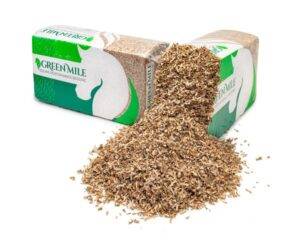
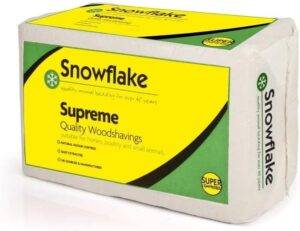
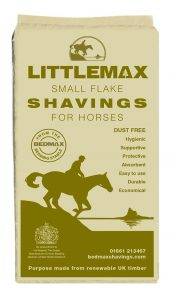
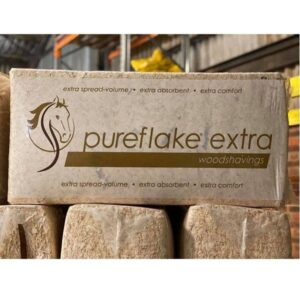
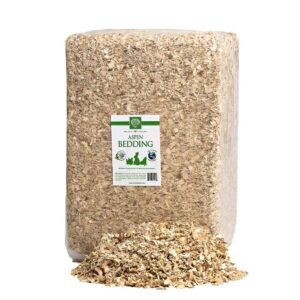
Other bedding options include vetbed, bath mats, kiln-dried dust-extracted woodshavings (pine or aspen), hemp, or paper/cardboard based substrate.
Guinea pigs are social animals and must never be housed alone.
Guinea pigs need same-species company to fulfil their welfare needs. They can be housed in the following combinations:
– Any number of females
– 1 neutered male + any number of females
– A pair of males
Males housed in more than pairs have a very high rate of falling out so we do not recommend it. It is also not advisable to house more than one neutered male with any number of females as they will likely fight over the girls.
We castrate all of our male guinea pigs and spay all of our female guinea pigs for health benefits and bonding option flexibility.
Bonding guinea pigs can sometimes be tricky and is about finding the right combination of personalities whilst providing safe, neutral conditions for the pigs to meet in. We offer an initial bonding service for anyone adopting a pig/pigs from ourselves to join existing guinea pig/pigs to ensure a suitable match.
Coming soon!